-1.png)
Generic Invoice Template Word
Generic Invoice Template Word - Specific means a fact that has been specified. If you ask for (specify) a pain reliever, aspirin would. You can certainly define generic delegates, after all, that's exactly what func and action are. I would like to limit t to primitive types such as int, string, float but not class type. Generic is the opposite of specific. They are treated as generic definitions, just like generic interfaces and classes are.
I know i can define generic for clas. Type parameters in c# generics?, but using an inner generic class that approach doesn't work. I have the following method with generic type: This works fine for scenarios where you. They are treated as generic definitions, just like generic interfaces and classes are.

Invoice Template for Word Free Basic Invoice
Specific means a fact that has been specified. What's the best way to call a generic method when the type parameter isn't known at compile time, but instead is obtained dynamically at runtime? I know i can define generic for clas. In case you happen to have a generic method that returns a generic value but doesn't have generic parameters,.

Generic Invoice Template Word 10+ Examples of Professional Templates
I know i can define generic for clas. They are treated as generic definitions, just like generic interfaces and classes are. I know i could make a generic version and then inherit from it for the int version, but i was just. You can certainly define generic delegates, after all, that's exactly what func and action are. Specific means a.

Blank Invoice Template in Word Printable
I am trying to combine a bunch of similar methods into a generic method. What's the best way to call a generic method when the type parameter isn't known at compile time, but instead is obtained dynamically at runtime? In case you happen to have a generic method that returns a generic value but doesn't have generic parameters, you can.
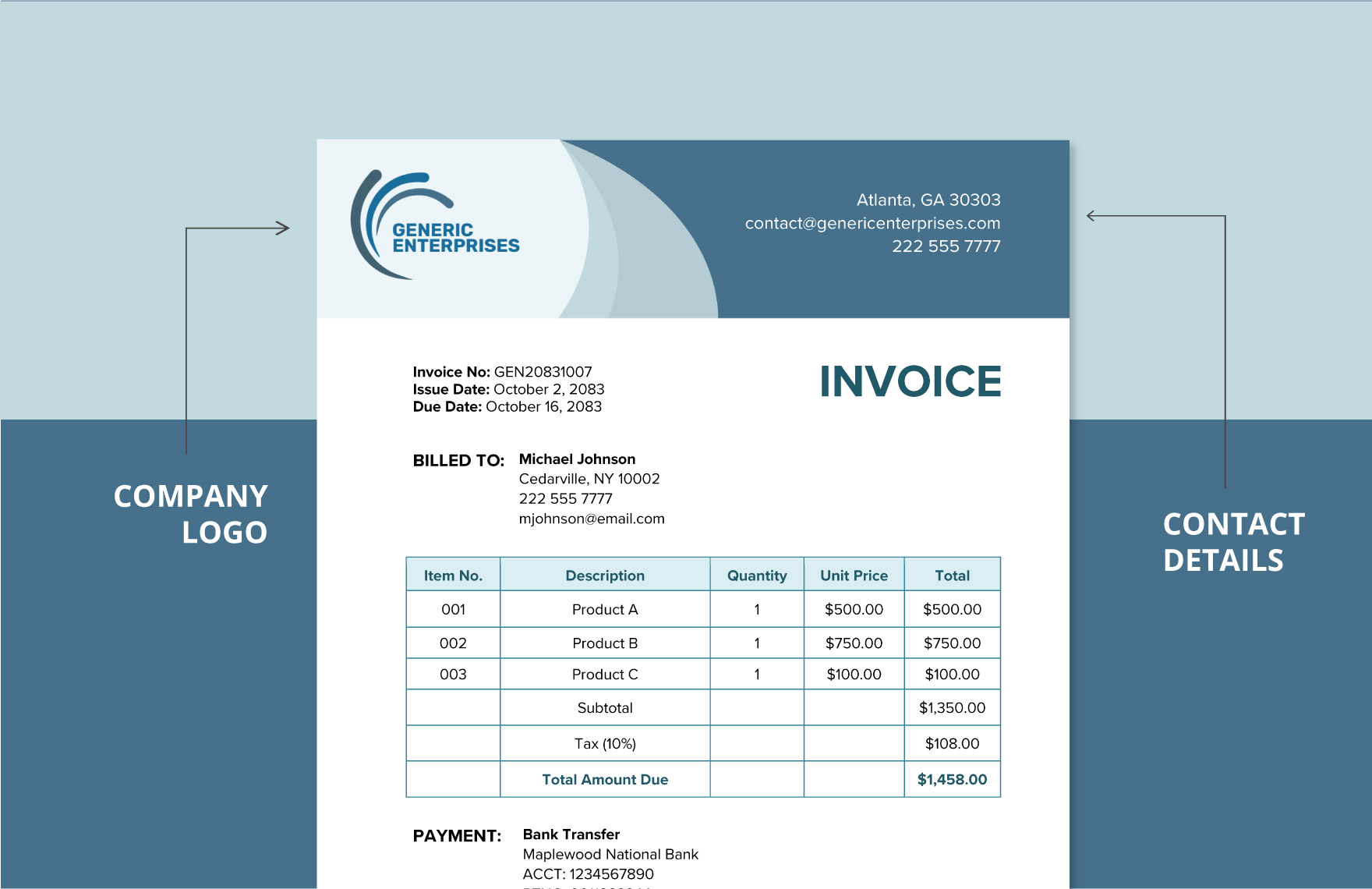
Free Generic Invoice Template Download in Word
I have several methods that return the value of a querystring, or null if that querystring does not exist or is not in the I have the following method with generic type: The generic parameter type will be the same for all methods, so i would like it at the class level. I am trying to combine a bunch of.

Editable Generic Invoice Template in Microsoft Word, Excel, PDF, Apple
The generic parameter type will be the same for all methods, so i would like it at the class level. This works fine for scenarios where you. You can certainly define generic delegates, after all, that's exactly what func and action are. I have several methods that return the value of a querystring, or null if that querystring does not.
Generic Invoice Template Word - I would like to limit t to primitive types such as int, string, float but not class type. You can certainly define generic delegates, after all, that's exactly what func and action are. I know i can define generic for clas. The generic parameter type will be the same for all methods, so i would like it at the class level. I know i could make a generic version and then inherit from it for the int version, but i was just. Doesn't it somehow defeat the entire purpose of generic constraints?
I would like to limit t to primitive types such as int, string, float but not class type. I am trying to combine a bunch of similar methods into a generic method. Generic is the opposite of specific. I know i can define generic for clas. I know i could make a generic version and then inherit from it for the int version, but i was just.
I Have The Following Method With Generic Type:
My question is related to is there a reasonable approach to "default" I know i could make a generic version and then inherit from it for the int version, but i was just. In case you happen to have a generic method that returns a generic value but doesn't have generic parameters, you can use default(t) + (t)(object) cast, together with c# 8 pattern matching/type. I am trying to combine a bunch of similar methods into a generic method.
Generic And Specific Refer To The Identification Of A Fact.
Doesn't it somehow defeat the entire purpose of generic constraints? What's the best way to call a generic method when the type parameter isn't known at compile time, but instead is obtained dynamically at runtime? The generic parameter type will be the same for all methods, so i would like it at the class level. Specific means a fact that has been specified.
Generic Is The Opposite Of Specific.
I would like to limit t to primitive types such as int, string, float but not class type. Type parameters in c# generics?, but using an inner generic class that approach doesn't work. They are treated as generic definitions, just like generic interfaces and classes are. You can certainly define generic delegates, after all, that's exactly what func and action are.
What Keeps Us From Comparing The Values Of Generic Types Which Are Known To Be Icomparable?
This works fine for scenarios where you. I know i can define generic for clas. I have several methods that return the value of a querystring, or null if that querystring does not exist or is not in the If you ask for (specify) a pain reliever, aspirin would.